People often ask me what a musical director actually does. And I understand the question, because from where the audience sits, the hard work is invisible by design. You arrive, you settle into your seat, the music begins, and if everything has gone well, it feels effortless. Natural. Almost inevitable.
It isn't.
What you're experiencing on concert night is the polished surface of a process that began, in some cases, nearly a year earlier at my computer, scrolling through catalogues of sheet music at two in the morning, wondering whether that particular song will work in a particular key for a particular group of voices.
This is what that process actually looks like.
It Starts With a Theme — And a Blank Page
The first thing you need is a concept. A thread. Something that gives a concert its identity and its shape.
I work with four different choirs, each with their own character. A theme that works brilliantly for one group might sit awkwardly with another. So the thinking begins early because everything that follows depends on getting this right.
A theme might be as broad as "music from the movies" or as specific as "the Great American Songbook". It might be built around a decade, a mood, a journey through different parts of the world. What matters is that it gives the evening a sense of direction. An audience should feel, as the concert unfolds, that each song belongs, that there is intention behind the programme, even if they couldn't quite explain what it is.
But here's the thing that many people don't realise: having a theme doesn't mean every song sounds the same. In fact, the opposite is true.
The Shape of an Evening
Think about a symphony. Or an opera. Or a full musical theatre score. The style remains consistent; it belongs to one composer, one world, and yet each movement, each aria, each song has a completely different tempo and emotional register. The drama breathes. It lifts and falls. It surprises you.
A choir concert must do the same thing.
If every song in a programme is performed at a similar pace, in a similar mood, with a similar emotional intensity, no matter how beautifully the choir sings, no matter how perfect the harmonies are, the audience will begin to drift. Not because the music isn't good. But because the human ear and the human heart need contrast. They need light and shade. They need the lullaby after the fanfare, the tender moment after the roof-raiser.
Choosing the programme is, fundamentally, the art of choreographing an emotional journey for an audience who doesn't yet know they're taking one. I'm always thinking: what comes before this, what comes after? Does this song allow the previous one to land? Does it set up the next one? Where does the energy need to lift? Where should we pause, and breathe, and let something quiet and beautiful settle over the room?
A Note on What We're Actually Here to Do
Before I go any further, I want to say something that might seem obvious, but I think is worth stating plainly.
The job of a musical director and the choir is not to educate the audience. It is to entertain them.
If they learn something along the way, if they go home having discovered a song they'd never heard before, or if they find themselves moved by a piece of music in a way they didn't expect, all the better. That's a wonderful bonus. But it is never the primary goal.
The primary goal is always the same: to give the audience a genuinely enjoyable evening. To take them somewhere. To send them home feeling something they didn't feel when they walked in.
Everything else, the musicology, the history, the harmonic complexity, is in service of that. Not the other way around.
Finding the Music
Once the concept is established, the real detective work begins.
Finding the right arrangements is harder than it sounds. Sheet music for choral groups ranges from the sublime to the barely usable, and what works on paper doesn't always work in practice. An arrangement might be pitched perfectly for a professional ensemble of twenty-four but sit uncomfortably with a community choir of fifty. The harmonies might be there, but the balance between the parts might be wrong for these voices in this room.
Sometimes the right arrangement simply doesn't exist, and it needs to be created from scratch, or substantially adapted. That means time, working through the harmonic structure of a song and deciding how to distribute it across soprano, alto, tenor and bass voices in a way that feels natural and singable.
And then there are the backing tracks.
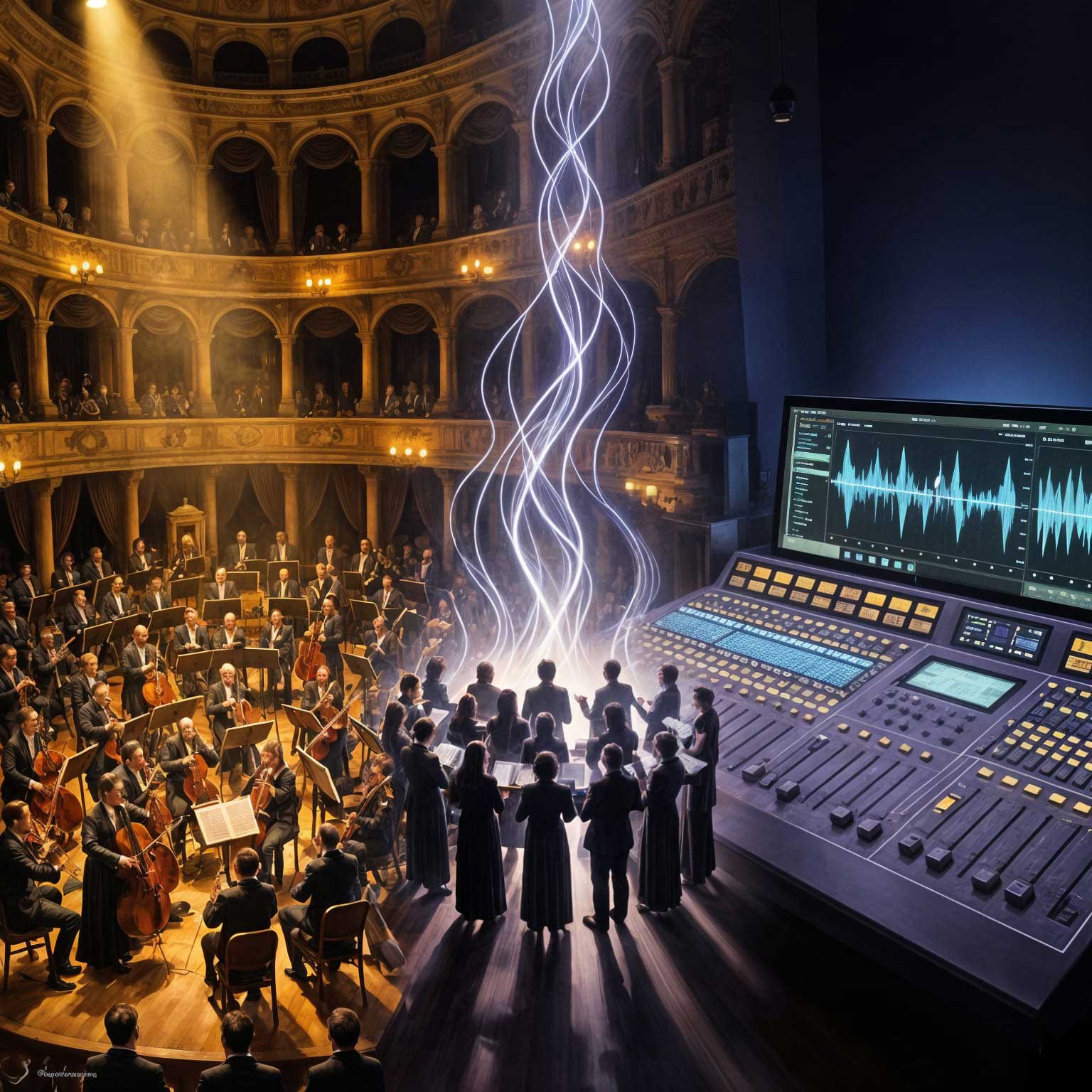
The choirs that I direct almost always perform with a backing track, a pre-recorded orchestral or instrumental accompaniment. Finding or commissioning the right backing track, in the right key, at the right tempo, is its own project. The track used in rehearsals needs to be workable and clear, so that singers can learn the piece confidently. The track used in performance needs to be something else, something that lifts the music, that makes the singers sound and feel like they're performing in a proper concert setting.
Getting all of this sorted, for every song in the programme, before rehearsals begin, that's the invisible mountain that has to be climbed before the choir ever gathers in a room together.
Working With Four Different Choirs
I work with four choirs, and each one teaches me something different about what it means to lead singers.
Every ensemble has its own personality. Some are naturally bold; they commit to the drama of a song instinctively, and they're not afraid of the big moments. Others are technically careful, they listen hard to each other, they're precise, they want to get it right before they'll let themselves go. Some groups have extraordinary depth in the lower voices; others soar in the upper registers. Some love comedy and theatricality; others are at their best in music that requires stillness and sincerity.
Good musical direction means reading your choir and meeting them where they are. It means knowing when to push and when to hold back, when to demand precision and when to let them loose to find the joy in a song themselves. A piece that I approach one way with one choir, I might approach completely differently with another, not because the music is different, but because the people are.
What stays the same, across all four groups, is the commitment to giving the audience something real. Something that has been thought about, prepared properly, and delivered with care and genuine feeling.
The Final Rehearsal
By the time the final rehearsal arrives, the music should be learned. The notes, the words, the dynamics, the entries, all of that should be in the singers' muscle memory, so that the rehearsal can be about something more important.
Performance.
We run the programme in order, because the order matters. We work on the transitions, the moments between songs, which are more important than most people realise. We talk about energy: where to give everything, where to hold something in reserve.
And then, at some point, we have to let it go. Trust the preparation. Trust the singers. Trust the music.
The best concerts are the ones where the preparation has been thorough enough that the choir can stop thinking about the preparation and start thinking about the audience in front of them.
The Bit You Never See
On concert night, none of this is visible. And it shouldn't be.
What the audience sees is the choir, smiling, in position, ready. What they hear is music that moves them, surprises them, makes them laugh or catches them off guard with something unexpectedly beautiful.
What they don't see is the months of planning that made it possible. The late evenings sourcing arrangements and tracks. The rehearsals where something wasn't quite working and we had to figure out why. The quiet moments backstage before the first note, when the musical director takes a breath and hopes that all the preparation has been enough.
It usually has been.
And if you're one of the people who's going to be sitting in that auditorium, enjoying the music without having to think about any of this, then everything has gone exactly according to plan.