What Regular Choir Singing Does for Your Body, Mind, and Soul, Even If You've Never Had a Lesson
You don't need to be a professional to feel the full force of what singing can do for you. In fact, for amateur singers, people who sing simply because they love it, the benefits can be even more profound. Here's what the science says, and what I see every single week in my rehearsal rooms.
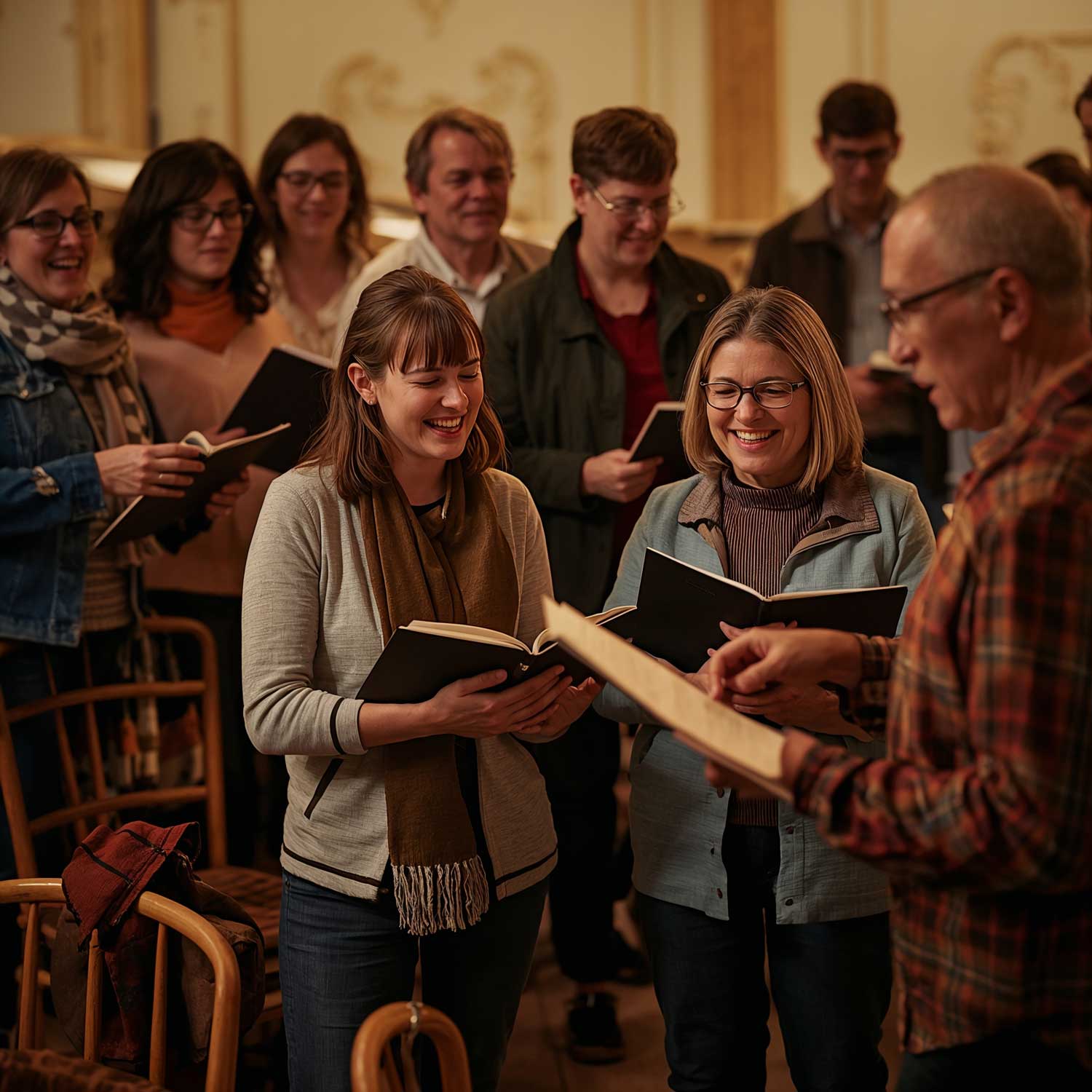
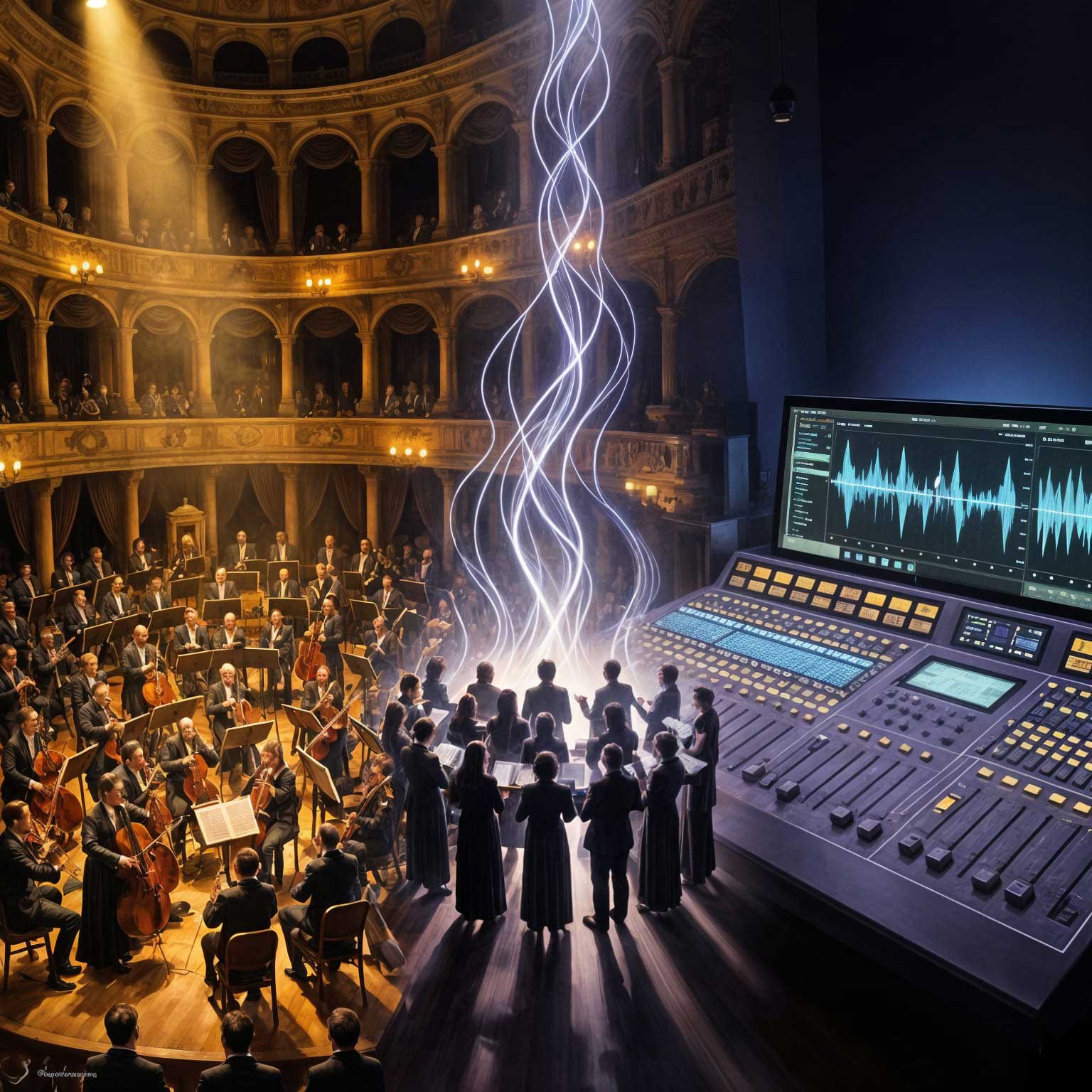
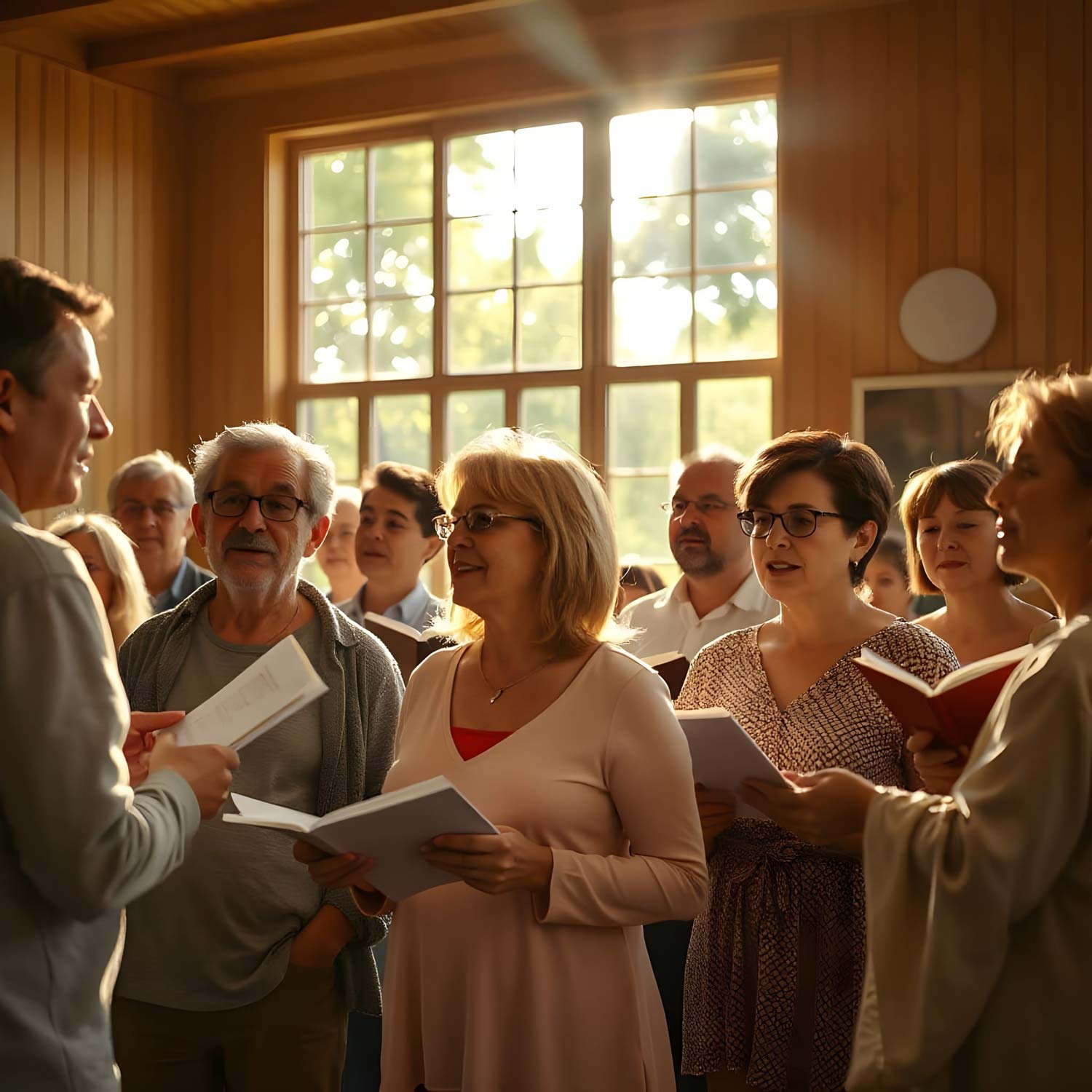
In my earlier post, I talked about the broad science of singing, cortisol, endorphins, oxytocin, and the general case for why opening your mouth and making music is one of the best things you can do for yourself. Today I want to go deeper. I want to talk specifically about what happens when you commit to singing regularly in a group, what changes in your body, your posture, your mind, your confidence, your memory, and your social life over weeks and months of showing up and singing together.
Because it does change you. I've watched it happen, again and again, across all four of my groups. And the research backs up every bit of it.
1. What Choir Singing Does to Your Lungs
Let's start with the physical, because this is the one that surprises people the most.
Most of us, in everyday life, breathe terribly. We take short, shallow breaths that barely fill the top third of our lungs. We hunch over phones and desks, compressing the chest, making the whole respiratory system work harder for less reward. For many people, particularly those in middle age and beyond, this has been going on for decades.
Choir singing forces a complete reset.
Every time you prepare to sing a phrase, you have to breathe deeply and correctly, expanding the diaphragm downward, filling the lungs fully, and then learning to control that breath as you release it across notes and words. This isn't just a singing technique. It's a respiratory workout that, practised weekly, has measurable effects on lung function.
Research published in medical journals has shown that regular singing can increase lung capacity, improve the strength and coordination of the muscles involved in breathing, and enhance overall respiratory efficiency. For people with conditions like asthma or COPD, therapeutic choir programmes have been used with remarkable results, participants reporting improvements not just in lung function but in quality of life, energy levels, and the ability to manage their symptoms.
For singers in perfectly good health, the effect is still significant. Better lung capacity means better oxygen delivery to every cell in the body. More efficient breathing means less fatigue, clearer thinking, and more energy for the rest of the day. And once you've learned to breathe properly for singing, that improved pattern starts to carry over into the rest of your life.
In Cantãmus, singing four-part choral harmonies demands exactly this kind of breath control, sustaining long phrases, matching your breath to the arc of the music, and learning to support from the diaphragm rather than the throat. Members who've been with the group for a year often tell me they feel noticeably different, that they're simply breathing better.
In Canto Mundial, our multilingual and multicultural repertoire includes songs from different traditions, each with different phrase lengths and vocal demands. The variety itself is good training; the lungs and breath support muscles are constantly being asked to do new things.
2. Posture: The Thing Nobody Expects to Change
Here's something I find genuinely fascinating, and something I notice consistently in my rehearsal rooms: people's posture improves when they sing regularly.
Good singing demands good posture. You cannot properly support a note when you're hunched over. You cannot project sound if your chest is collapsed and your chin is tucked. A good director will consistently ask you to stand or sit tall, to open the chest, to bring the head up, and to release the shoulders. Over time, this instruction becomes a habit, and that habit begins to extend beyond the rehearsal room.
The mechanism is more interesting than it might first appear. Singing engages the deep postural muscles of the back and core, not just the surface muscles. Holding a proper singing posture for two hours of rehearsal is, in effect, a gentle and sustained workout for the muscles that keep your spine aligned. Many singers report that back pain, particularly the low-grade chronic kind that so many adults carry around, decreases over time with regular choral singing.
There's also a neurological dimension. When you habitually associate a tall, open posture with the act of singing, with something enjoyable, rewarding, and social, your brain starts to build a positive feedback loop. Good posture begins to feel good rather than effortful.
In the TheatreSong Collective, where we're performing musical theatre repertoire and members are developing their stage presence alongside their voices, posture is central to everything. How you hold yourself is part of the performance. Members who join the group often arrive with the slightly self-conscious, slightly collapsed posture of someone who has spent years believing they can't sing, and leave, weeks later, carrying themselves differently. Taller. More open. More present.
3. Confidence: The Unexpected Transformation
I want to be careful here because confidence is complex, and I don't want to oversimplify it. But I will say this: the transformation I see in singers' confidence over time is one of the most meaningful things about this work.
It starts small. Someone joins one of my groups tentatively, perhaps they've always wanted to sing but were told at school they couldn't, or they're nervous about being heard, or they're an expat new to the area who doesn't know anyone. They take a seat at the back. They half-mouth the words for the first few weeks. They're worried about making a mistake.
And then something shifts.
It happens at different times for different people. Sometimes it's the first rehearsal when they genuinely lock into a harmony and feel it resonate in the room. Sometimes it's the day they realise they've learned an entire song without noticing. Sometimes it's standing on stage at a concert and looking out at an audience applauding, not for a professional performance, but for them, for something they created together.
Research in psychology backs this up. Repeated experiences of mastery, setting a challenge, working at it, and succeeding, are one of the most reliable builders of self-efficacy, which is the belief in your own ability to do difficult things. Choir singing provides this in abundance. Every new song is a small challenge. Every concert is a culmination of dozens of small mastery experiences stacked on top of each other.
Crucially, the group setting makes the confidence-building safer. In a choir, you are never alone. If you wobble on a note, the singer beside you carries you. If you lose your place, the section brings you back. This supportive container allows people to take risks they would never take on their own, and in doing so, to discover things about themselves they didn't know.
The Vall del Pop Singers in Alcalalí are particularly close to my heart for exactly this reason. It's an all-ages, come-as-you-are group, open to anyone who wants to sing popular songs in a relaxed and friendly atmosphere. No auditions, no prerequisites. People arrive uncertain and leave, over time, singing with their full voice and loving every moment of it. That shift, from hesitation to full-throated joy, is one of the most beautiful things I know.
4. Memory: Singing Is One of the Best Workouts Your Brain Can Get
Let me be specific about what the brain is doing during a choir rehearsal, because it's extraordinary when you lay it out.
You are reading (or memorising) lyrics. You are tracking the melody. You are listening for your harmony part and distinguishing it from the other vocal lines. You are watching the director. You are counting rhythms and rests. You are monitoring your own pitch and adjusting it in real time. You are breathing consciously. And, in performance, you are doing all of this while also communicating something emotionally to an audience.
No single one of these tasks is trivial. Doing all of them simultaneously is a feat of cognitive coordination that researchers describe as engaging both hemispheres of the brain concurrently, something relatively few human activities achieve. The left hemisphere handles the analytical work: rhythm, language, structure. The right hemisphere handles the more holistic: melody, emotion, spatial sound. Choir singing calls on both, simultaneously, every session.
The implications for brain health are significant. This kind of complex, multi-layered mental activity is associated with the building and maintenance of cognitive reserve, the brain's resilience against decline. Studies have consistently found that learning new music, learning to read notation, and active group music-making are among the activities most protective against cognitive deterioration as we age.
The memory demands of learning repertoire are particularly valuable. Learning lyrics and melodies engages different memory systems than reading text or recalling facts. Musical memory is robust and long-lasting, which is why so many people living with dementia can sing songs from their youth even when other memories have faded. For those of us who are neurologically healthy, singing is a way of exercising memory systems that everyday life often underuses.
In Cantãmus, where the repertoire spans classical, sacred, and popular music with four-part harmonies, the memory and cognitive demands are high, and entirely enjoyable. Members aren't sitting at a desk doing puzzles to keep their minds sharp. They're making beautiful music together. The cognitive workout comes built into something they love.
5. Social Health: The Benefit That Deserves to Be Taken More Seriously
In recent years, health researchers have begun to talk about loneliness the way they talk about smoking or obesity, as a serious, quantifiable risk to physical health. Chronic loneliness is associated with elevated cortisol levels, weakened immune function, disrupted sleep, and significantly increased risk of cardiovascular disease. It is, in the clinical language of public health, a crisis.
Choir singing is one of the most effective antidotes we know of.
A landmark study from Oxford University found that people who sang together bonded more quickly and reported higher levels of connection and inclusion than groups who socialised in other ways. The act of breathing together, synchronising rhythm, matching pitch, and creating something collectively triggers a kind of social bonding that is deeper and faster than conversation alone. It bypasses the usual awkward early stages of getting to know someone and goes straight to something more primal, the experience of having made something together.
For people who have moved to a new country or region, retired and lost the social scaffolding that work provides, or simply found their social world contracting with age, a choir is often transformative. It provides a fixed point in the week, a commitment, a reason to leave the house, a room full of people who expect to see you. And because the shared activity creates an instant common identity, friendships form more quickly and feel more substantial than those formed through more passive social situations.
I think about this often when I look around my rehearsal rooms. In Canto Mundial, we have members from six different countries, from different cultural backgrounds, different first languages, and different life experiences. Without the choir, most of these people would likely never have met, let alone become friends. Singing across those differences creates something genuinely special, a shared language that operates beneath words.
The Vall del Pop Singers in Alcalalí bring together people of all ages in a community setting, and that intergenerational dimension adds its own richness. Younger and older singers sharing the same music, helping each other, laughing at the same moments, building relationships that cross the usual social boundaries. That kind of connection is rarer than it should be, and more valuable than it's often given credit for.
The TheatreSong Collective, meeting in Gata de Gorgos on Monday evenings, provides that weekly anchor, a regular, reliable gathering that members look forward to, plan around, and often describe as a highlight of their week.
A Note on What "Amateur" Really Means
The word amateur comes from the Latin amare, to love. An amateur is, literally, someone who does something for love. Not for money, not for career, not for professional obligation. For love.
There is nothing lesser about that. In many ways, singing for love is the purest form of it.
The health benefits I've described above don't require professional training. They don't require a particular voice type, a musical background, or a certain range. They require only one thing: showing up and singing. Week after week, in the company of other people who are also there for love of it.
The lungs strengthen. The posture opens. The confidence grows. The memory is exercised. The social bonds form. All of it happens, regardless of whether you can read music or find A flat without help. It happens because you are there, and you are singing.
Ready to Find Out for Yourself?
All four of my groups are open to new members, no experience required, no auditions, no pressure. Whether you're drawn to the spiritual depth of Cantãmus, the international flavour of Canto Mundial, the theatrical energy of the TheatreSong Collective, or the relaxed, all-welcome warmth of the Vall del Pop Singers, there's a group that will suit you.
Come for one session and see what you think. I suspect you'll come back.
Get in touch via the contact page, and I'll point you in the right direction.