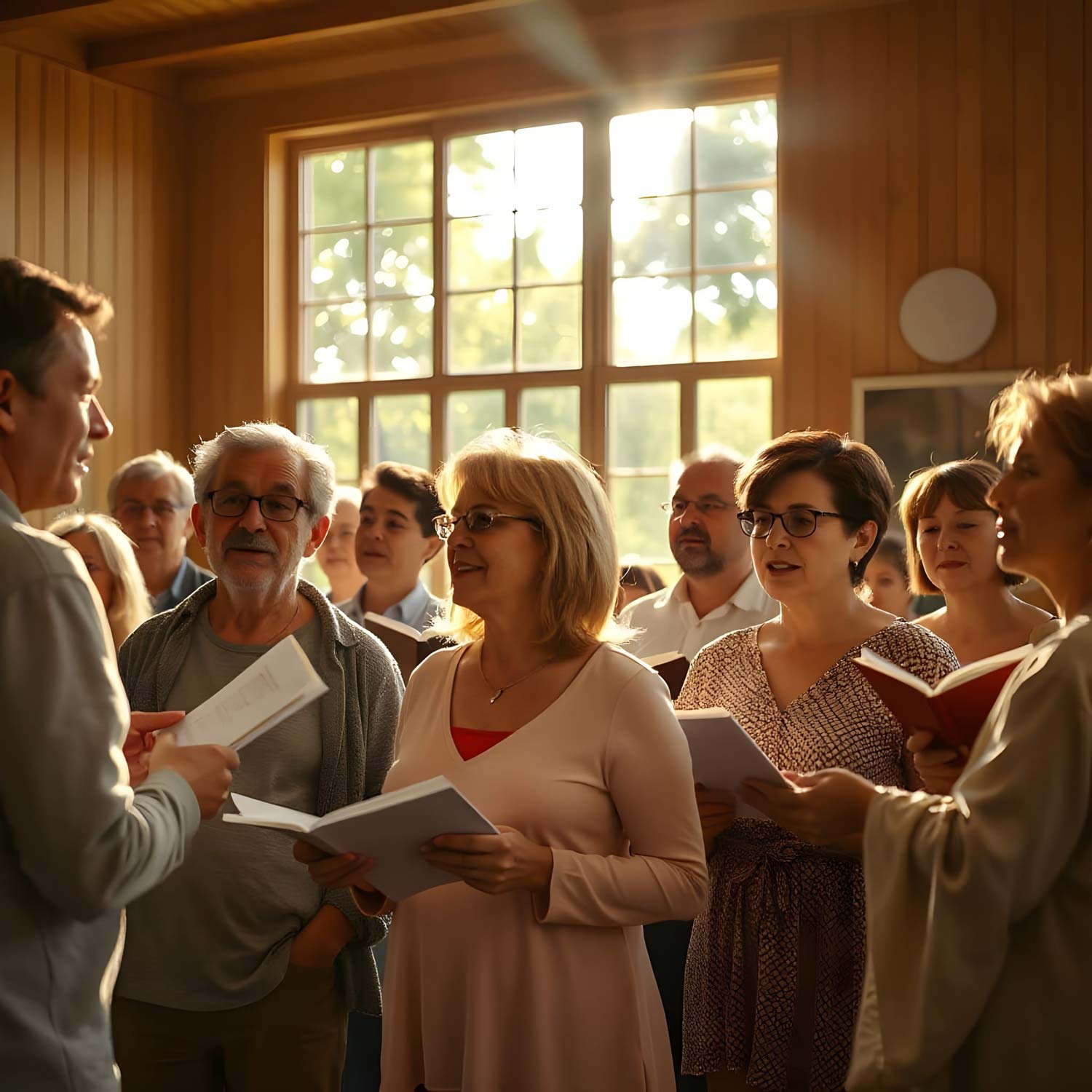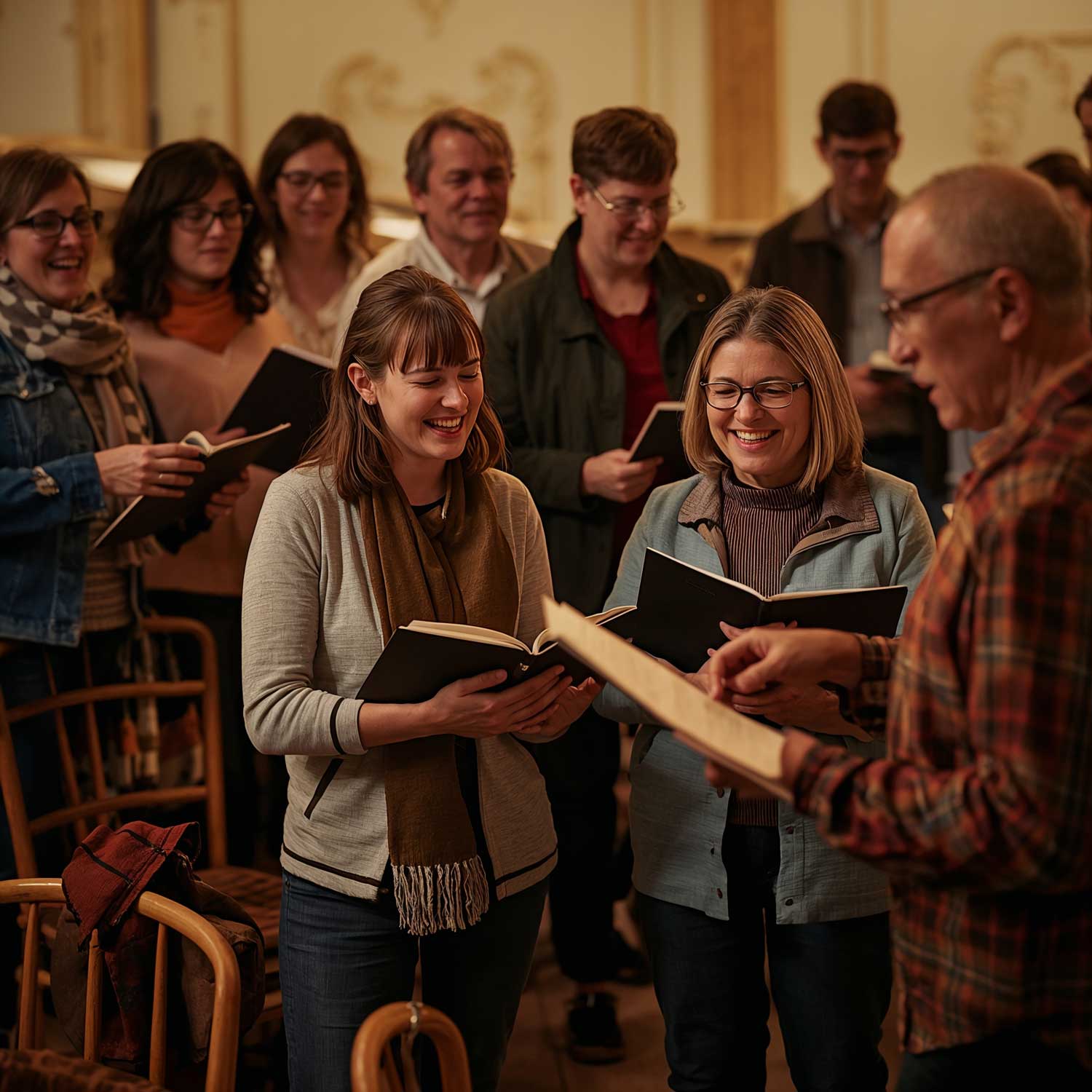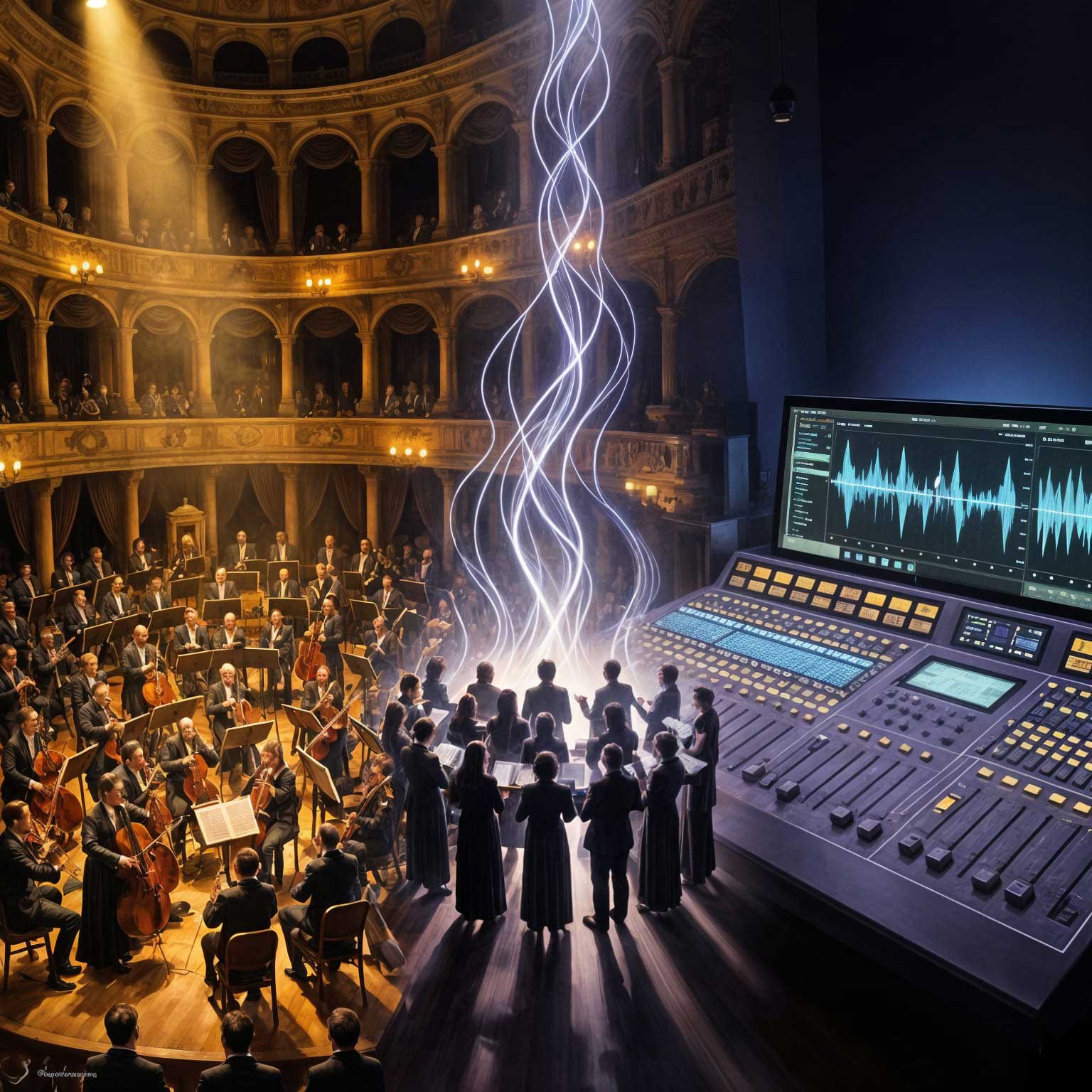
There is a moment, just before a choir begins to sing, when the air in the room seems to hold its breath. Whether the accompaniment comes from a live orchestra in the pit or from a carefully crafted recording played through a speaker system, that moment is the same. The music that follows, however, is shaped enormously by the choice that was made long before the performance began.
Backing tracks or live music? It is one of the most frequently debated questions in the world of choral performance, and one where opinions can run surprisingly strong. As someone who has thought carefully about this and worked extensively with both, I wanted to share my honest view, because I think the debate is often framed in the wrong way entirely.
The Ideal — And Why It Isn't Always Possible
Let me be clear from the outset: a full, professional live orchestra, performed by skilled musicians who know the score, is a magnificent thing. The energy is live and reactive. When a choir breathes, a good conductor and ensemble breathe with it. Tempos can flex naturally. A cello section swelling beneath a soprano line creates a warmth that no recording can quite replicate. If you have the resources, the musicians, and the budget to do this properly, it is genuinely wonderful.
The operative word, of course, is properly.
In the real world of community choirs, amateur ensembles, schools, smaller arts organisations, a full live orchestra is rarely an option. And this is where the conversation becomes far more nuanced than a simple "live good, recorded bad" conclusion would suggest.
The Hidden Problem with a Partial Orchestra
Here is the thing that often gets overlooked: a partial live ensemble can actually work against a performance rather than for it.
Imagine performing a piece that calls for brass, strings, woodwind, harp, and percussion, but you have access only to a piano and a handful of strings. The gaps in the sound are conspicuous. Audiences who know the work will notice immediately. Those who don't may simply feel that something is missing without being able to identify why. The choir, meanwhile, may find themselves working against an accompaniment that doesn't fully support them tonally or dynamically. Rather than being lifted by the orchestra, they are compensating for it.
A well-produced backing track, by contrast, gives you the full orchestration — every part, every instrument, every texture that the composer intended. The choir sings on top of something complete.
The Case for Backing Tracks
There is a pragmatic argument here that I find very compelling, and it is one I speak from experience in making.
When I perform with a backing track, I am working with a sound world that has been carefully crafted and balanced. There are no day-of-performance variables, a brass player who had a late night, a string section that is under-rehearsed in a particular passage, an acoustic that favours one section of the ensemble over another. The track is consistent. What you rehearse to is what your audience hears.
There are also very real practical advantages for choral singers: the tempi are fixed, which encourages precision and discipline in ensemble singing. Entries are clear. Dynamic relationships between voice and accompaniment are predictable. For a choir preparing a concert programme, this reliability is a genuine benefit.
And for audiences? A full, rich orchestral sound supporting a choir, even from a recording, is far more satisfying than a thinly-accompanied live version of the same work. The emotional impact of the music, which is ultimately what we are all there for, is better served.
The Limitations — Let's Be Honest
Fairness demands that we also acknowledge what backing tracks cannot do.
The most significant limitation is flexibility. A live ensemble can follow a conductor's mood, respond to a soloist who takes a phrase just a little slower, or adjust in the moment to the acoustic of a particular venue. A backing track cannot. If a choir rushes or drags, there is no give. Conductors who work with tracks must invest considerable rehearsal time ensuring that the ensemble is truly together with the recording, and there is an art to making a performance feel alive and expressive within fixed parameters.
There is also, for some audiences and performers, a psychological dimension. Knowing that the accompaniment is recorded can feel slightly removed and less of a shared creative act in the room. Some choral singers find it less inspiring to rehearse to a track than to work alongside live musicians. These feelings are valid and worth acknowledging, even if they don't always translate into a measurable difference in the final result.
And the quality of the backing track itself matters enormously. A poorly produced, synthetic-sounding recording will undermine a performance just as surely as a weak live ensemble. If you are going to use backing tracks, invest in quality ones.
Where I Land on This — And Why
My view, which I hold thoughtfully rather than dogmatically, is this: the choice between backing tracks and live music should be driven by what will produce the best overall musical experience for your audience and your choir, not by a principle.
If a full, professional live orchestra is available, affordable, and appropriate, use it. It is the gold standard, and there is no substitute for what it brings to a performance.
But if the choice is between a well-produced backing track and a partial live ensemble that cannot do justice to the score, I will choose the backing track every time. The completeness of the sound, the reliability of the performance, and the musical integrity of the full orchestration outweigh the authenticity of having live musicians present when those musicians can only offer a fraction of what the music demands.
A choir deserves to be heard at its best. A backing track, used well, can make that possible.
A Note for Audiences
If you attend a choral concert and hear backing tracks being used, I'd encourage you to listen with fresh ears rather than with preconceptions. Ask yourself whether the sound is full and supportive, whether the choir is engaged and expressive, whether the music is moving you. If the answer to those questions is yes, then the accompaniment has done its job and the method by which it arrived in the room matters rather less than you might think.
Great music is great music. The debate about how it is accompanied is, ultimately, secondary to the experience of hearing it sung well.