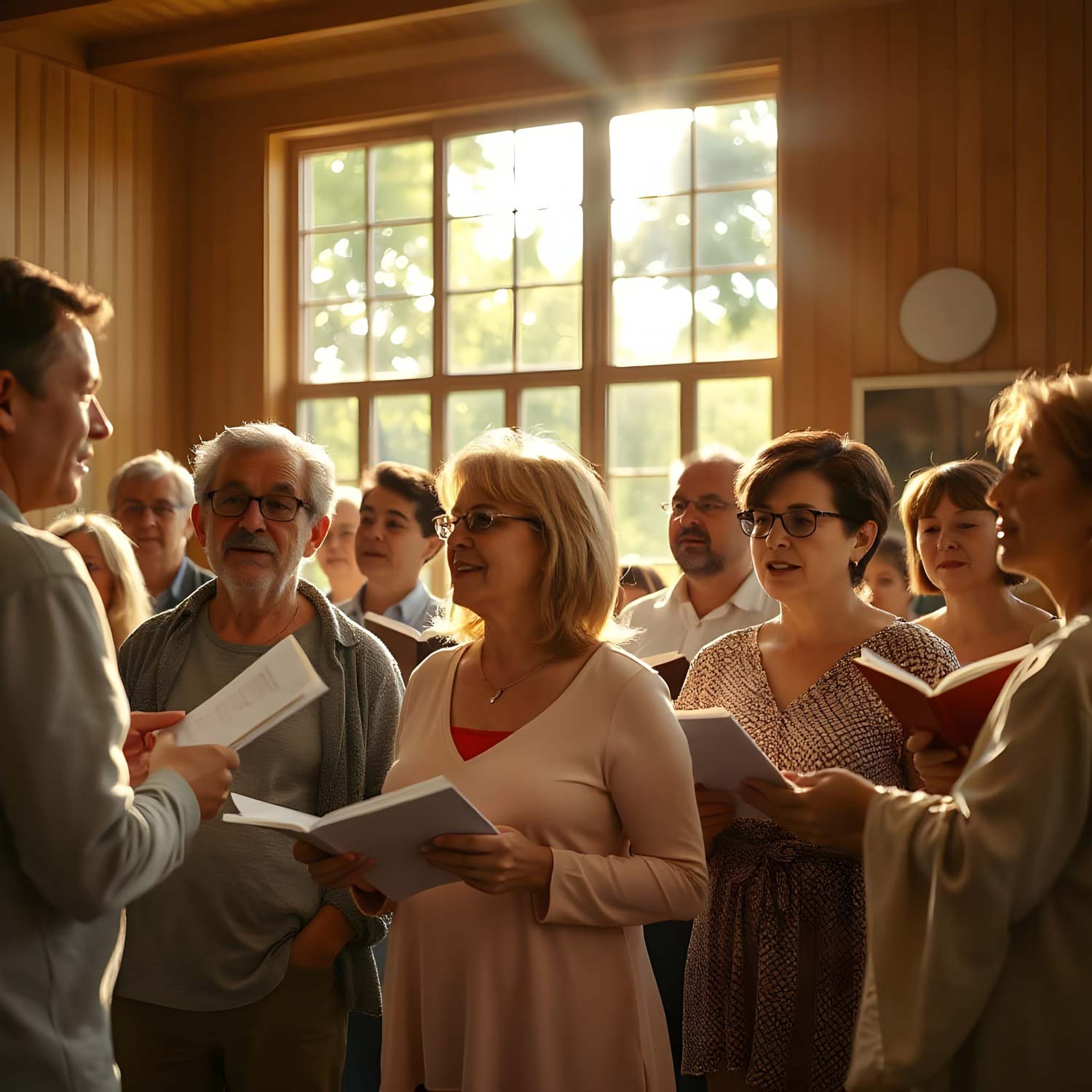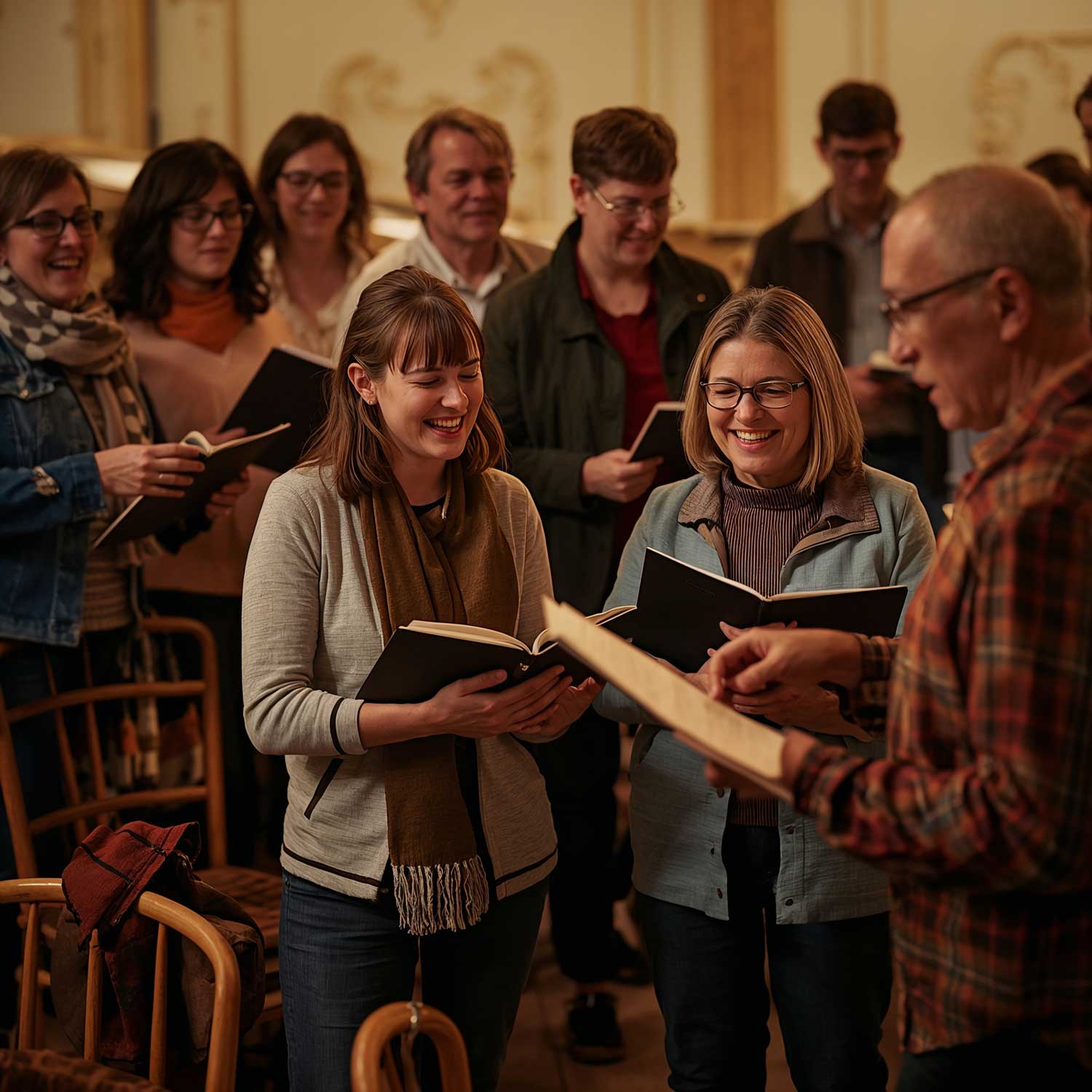
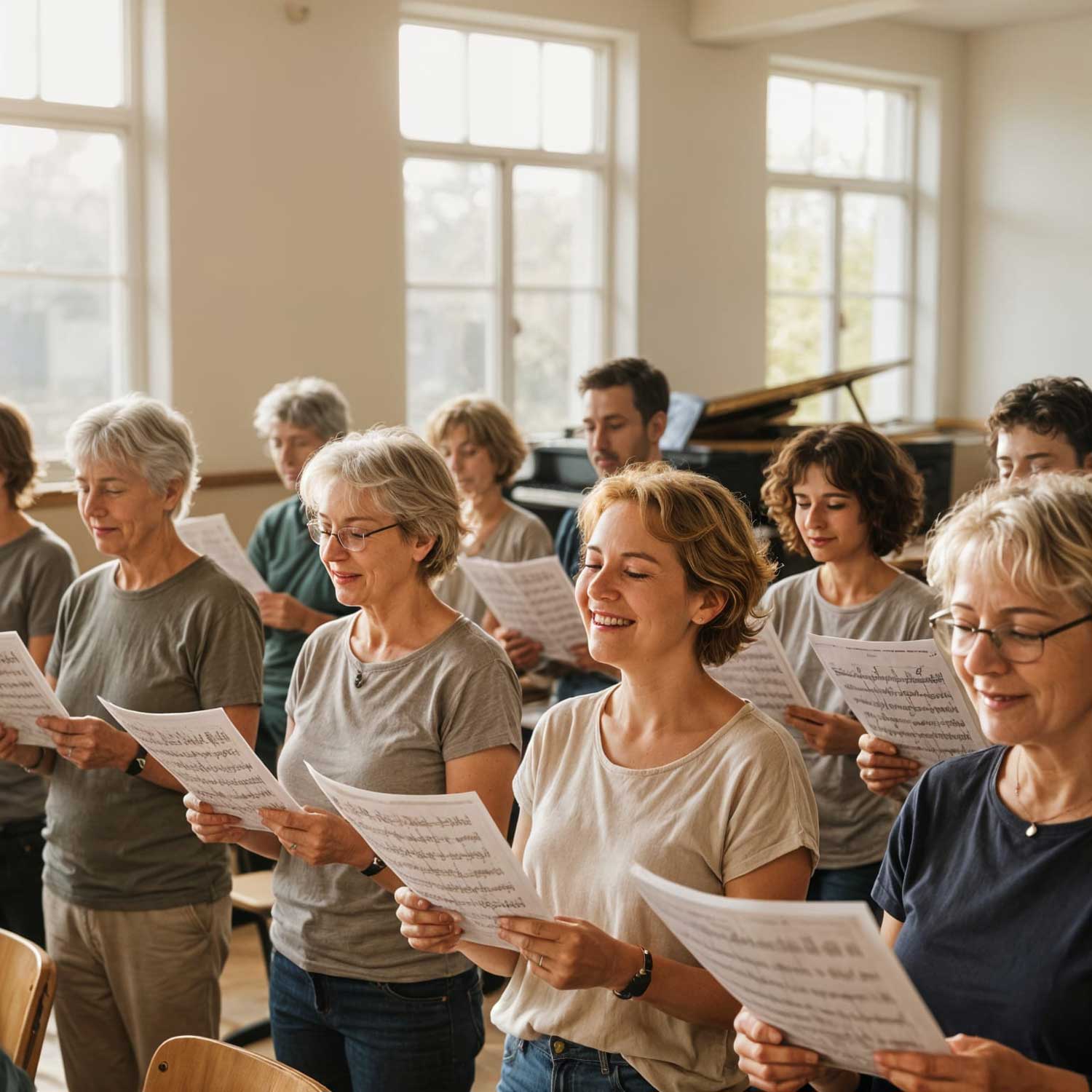
It is never too late to start singing. Every so often someone catches me after a rehearsal and tells me, rather quietly, that they have always wanted to sing. It is usually followed by a nervous laugh and a confession that they were told at school to mouth the words, or that they are surely too old to begin now. I would like to say here what I say to them: you are not too late, and you are very welcome.
Whether you have always dreamed of joining a choir or you simply want a new creative outlet, this guide is for you.
"I Can't Sing" Is Usually a Story, Not a Fact
Most of the beginners I meet are carrying around a belief that they cannot hold a tune. It often traces back to one careless comment from a teacher, a relative or a classmate, and it can stick for forty years.
The science is kinder than the playground. True tone deafness, known as congenital amusia, is rare. Estimates vary between roughly one and a half and four per cent of the population. Researchers who study singing also report that the large majority of people who sing occasionally manage to stay in tune and in time, even without formal training. If you can hear that a singer on the radio has gone flat, your ear is working. You are almost certainly untrained rather than tone deaf, and training is something we can do something about.
Singing is a physical skill that joins up your hearing, your breath and the small muscles of your voice. Like learning to drive, it feels clumsy at first, and then one day it simply clicks. Plenty of people discover that moment at fifty or seventy.
Why It Is Worth the Courage
Beyond the pure joy of making music, there is good evidence that singing with others does you good. A study of choir members in Ireland found that singers reported better social connection, improved breathing, mental stimulation and a lift in mood. In San Francisco, a randomised trial following 390 older adults found that weekly choir rehearsals reduced feelings of loneliness. Researchers in London even measured stress hormones in singers affected by cancer and found that a single rehearsal brought them down.
A word of honesty: much of this research relies on what singers say about themselves, and studies differ in size and quality. Still, the picture is consistent, and it matches what I see every week. People arrive tired from the day and leave brighter, usually chatting to someone.
Starting at Home
You do not need to wait for a choir to begin. A few minutes of gentle practice at home will build your confidence a great deal.
Start with your breath. Place a hand on your belly and breathe in slowly so that your hand moves outwards, then release the air on a long, soft "sss". Next, hum quietly on a comfortable note and notice the buzz around your lips and nose. Lip trills, the bubbling sound children make when they pretend to be a motorbike, are wonderful for loosening the voice. Gentle sirens, gliding from low to high and back down on an "oo" sound, help you find the edges of your range without strain.
Then sing along with a song you love, in a key that feels easy. If you are reaching or straining, drop the pitch. Recording yourself on your phone can feel excruciating at first, but it is the quickest way to hear what is really happening, and most people are pleasantly surprised.
Little and often works far better than a marathon. Fifteen minutes a few times a week will do more for you than one long session on a Sunday. Keep a glass of water close, and if anything hurts, stop and rest.
Finding a Choir That Suits You
This is the step that makes people nervous, so here is some reassurance. Many community choirs, including the ones I direct, welcome complete beginners and do not ask anyone to audition. Do check before you turn up, because some choirs do hold auditions and it is worth knowing in advance.
When you are looking, a few questions are worth asking. Does the choir teach new songs by ear, with sheet music, with learning tracks, or a mixture? Do they sing the kind of music that makes you want to join in, whether that is pop, musical theatre, folk or songs from around the world? Can you come along and listen to a rehearsal before you commit? A good director will be delighted that you asked.
At your first rehearsal you can expect a warm-up, some time working with your own section, and a lot of repetition. That repetition is deliberate. It is how a choir learns, and it means nobody is expected to get a song right on the first attempt. Standing next to a confident singer helps enormously, and you will find that your voice naturally settles into the sound around you.
Taming the Nerves
Everyone is nervous at the start, including people who look perfectly relaxed. In a choir, you are part of a blend, so your voice is supported by everyone around you. A wobbly note is quickly absorbed by the sound of the group, and no one is listening for your mistakes because they are all busy worrying about their own.
Be patient with yourself. Some weeks you will feel as though nothing is improving, and then a harmony falls into place, and you realise you are doing something you once thought was impossible.
Your Voice Is Waiting
You already own the instrument. It travelled with you from your first cry to this very moment, and it has been waiting patiently for you to give it something to do. Take the first small step, whether that is humming in the kitchen, singing along in the car or sending a message to a local choir to ask if you can come and listen.
If you live on the Costa Blanca and fancy coming along to a rehearsal, I would love to hear from you. Bring a friend if it helps, and leave your worries at the door. We will keep a place for you.